The project

From organic waste to ready-to-use PHBV.

A 36-month effort to prove, at pilot scale, that biodegradable plastics can be produced continuously from the waste our cities already generate.

The challenge

Plastic is everywhere — and mostly fossil.

Global plastic demand keeps rising, yet the vast majority is still made from oil and gas and lingers for centuries. Bio-based, biodegradable alternatives exist — but producing them is slow, batch-based and expensive.

Meanwhile, cities discard millions of tonnes of organic waste that could become feedstock instead of landfill.
The solution

A continuous loop, end to end.

PHACTUS couples acidogenic fermentation of urban organic waste with a continuous PHA bioprocess and green-solvent recovery — running without interruption.

The outcome is competitive, scalable PHBV that biodegrades and feeds back into the circular economy, validated at an industrial pilot hosted by a waste operator.

How it works

How PHACTUS turns waste into PHBV.

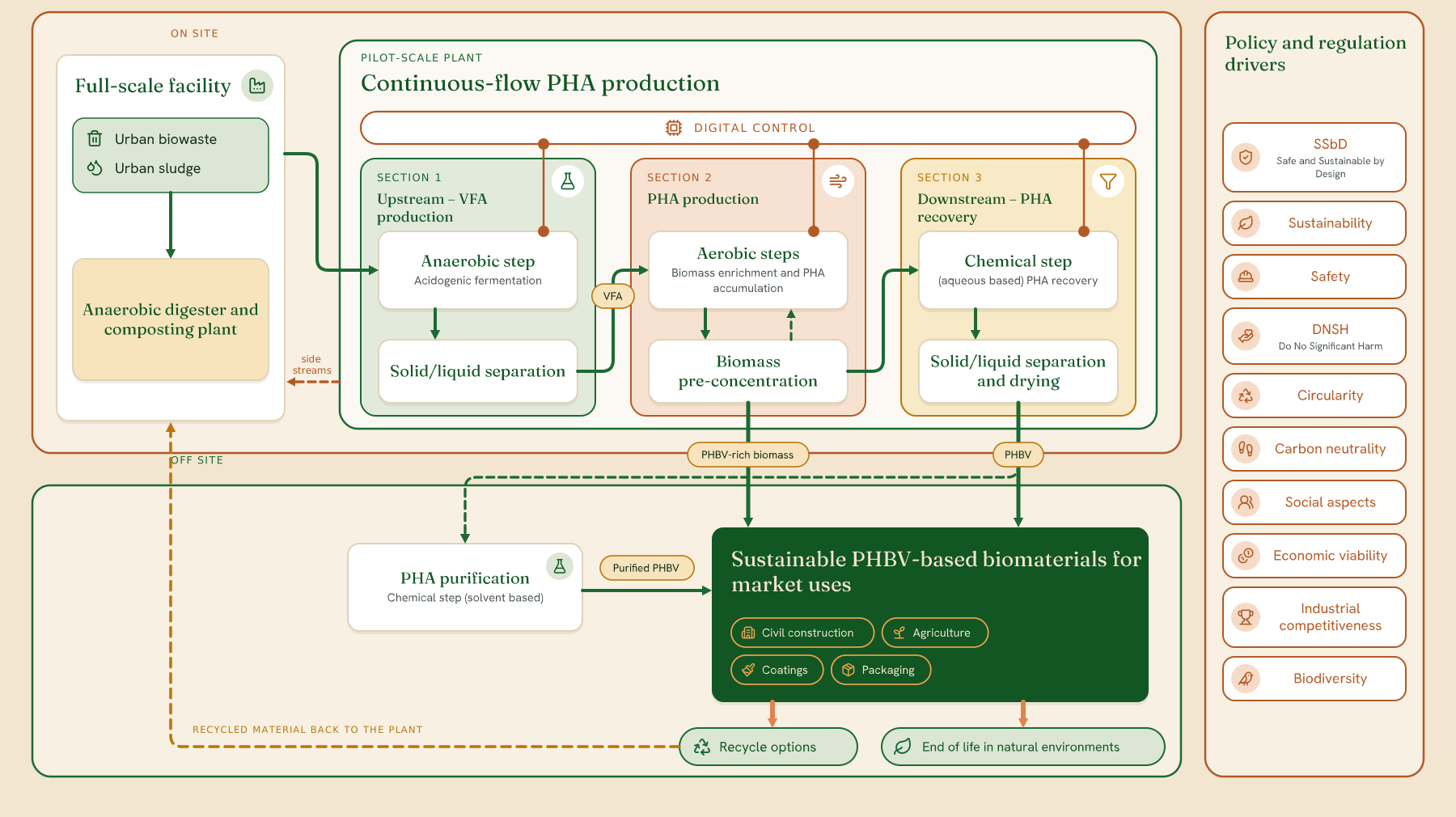
From urban biowaste and sludge to sustainable PHBV-based biomaterials, guided by policy and regulation.

PHACTUS process from waste to PHBV: on-site full-scale facility (urban biowaste and sludge, anaerobic digester) feeding a pilot-scale continuous-flow PHA production plant with digital control — Section 1 upstream VFA production, Section 2 PHA production, Section 3 PHA recovery — then off-site PHA purification into sustainable PHBV-based biomaterials for civil construction, agriculture, coatings and packaging, with recycle options and end of life, guided by policy and regulation drivers.

Scorri orizzontalmente per vedere il grafico completo.

Pilot plant

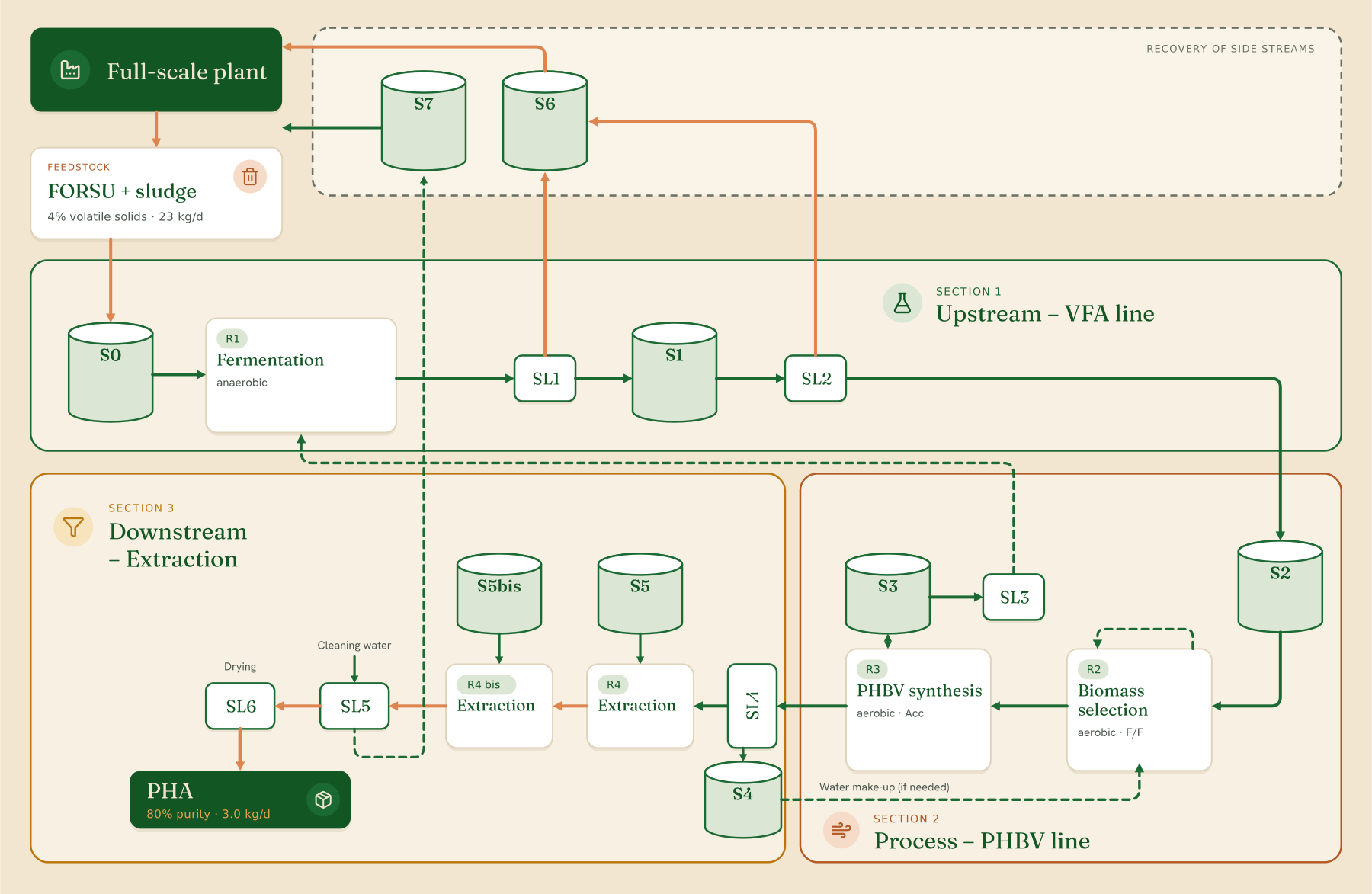
Pilot plant lay-out.

Three sections take urban biowaste to PHA: 3.0 kg per day at 80% purity.

Scorri orizzontalmente per vedere il grafico completo.

S0–S7 storage tanksSL1–SL3 separation unitsSL4 membrane unitSL5 filter press or beltSL6 drying— liquid stream— solids / product– – internal recyclePumps not indicated

What we set out to do

Four
objectives.

From a robust process to a market-ready product, designed safe and sustainable from the start.

Demonstrate a stable, continuous PHA production chain from urban organic waste at pilot scale, raising the technology readiness level from TRL 3 to TRL 6.
Deliver three grades of PHBV suitable for rigid, flexible and coating applications, validated against commercial performance benchmarks.
Apply a Safe-and-Sustainable-by-Design framework with life-cycle and social-life-cycle assessment guiding every decision from feedstock to end-of-life.
Build the business case, IP strategy and stakeholder network to carry continuous PHA toward commercial deployment after the project.

Innovation & impact

Why a continuous process changes the maths.

lower carbon footprint vs. fossil plastics
0 %
target cost per kg of PHA
<€ 0
productivity over batch processes
+ 0 %
PHBV grades for different applications
0

Work plan

Work packages and how they interact.

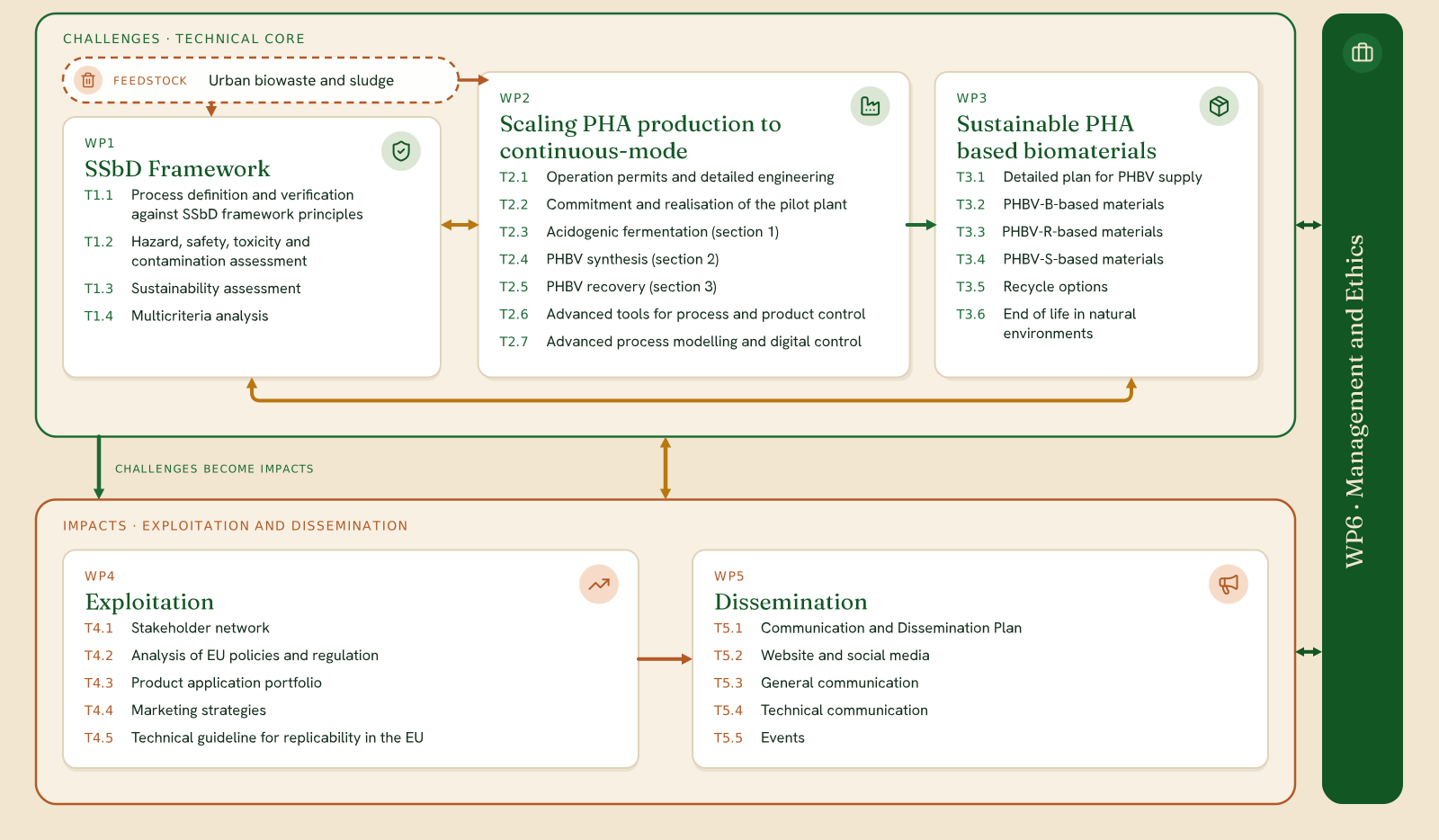
Technical work packages answer the challenges; exploitation and dissemination turn results into impact.

PHACTUS work plan: technical core work packages WP1 SSbD Framework (SDU), WP2 Scaling PHA production to continuous-mode (SIPHA) and WP3 Sustainable PHA-based biomaterials (INRAE), each with their tasks; impact work packages WP4 Exploitation (ACEA Ambiente) and WP5 Dissemination (EBB); and WP6 Management and Ethics overseeing the whole project. Feedstock: urban biowaste and sludge.

Scorri orizzontalmente per vedere il grafico completo.

Circularity

Closing the loop: recycle options.

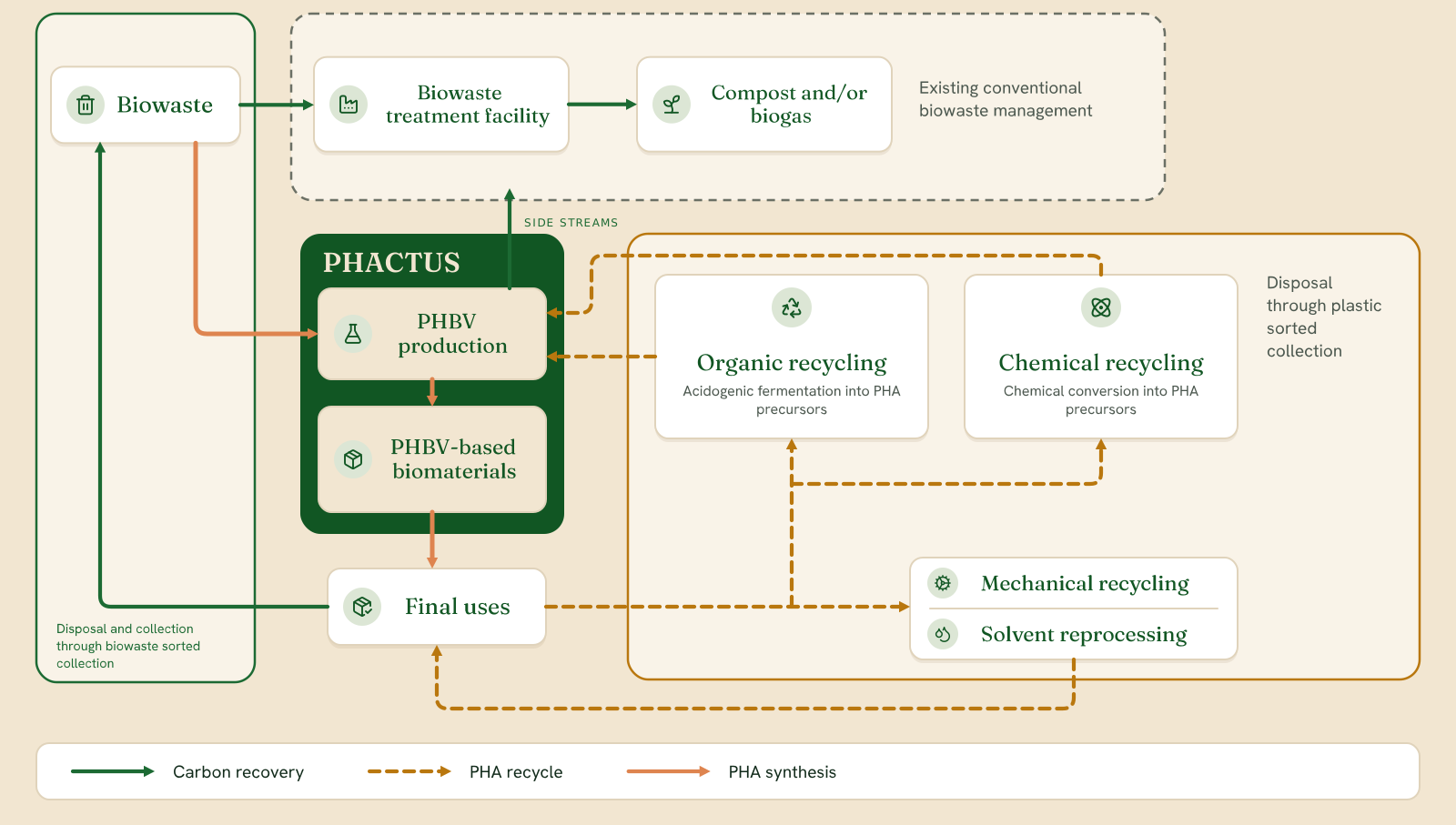
Biowaste becomes PHBV-based biomaterials, and at end of life the carbon comes back as new PHA or as compost and biogas.

PHACTUS circularity — closing the loop: biowaste from sorted collection becomes PHBV-based biomaterials through PHACTUS PHBV production; at end of life the carbon comes back as new PHA through organic recycling (acidogenic fermentation), chemical recycling (chemical conversion) and mechanical recycling, or as compost and biogas via conventional biowaste treatment. Legend: carbon recovery, PHA recycle, PHA synthesis.

Scorri orizzontalmente per vedere il grafico completo.

Governance

Consortium governance.

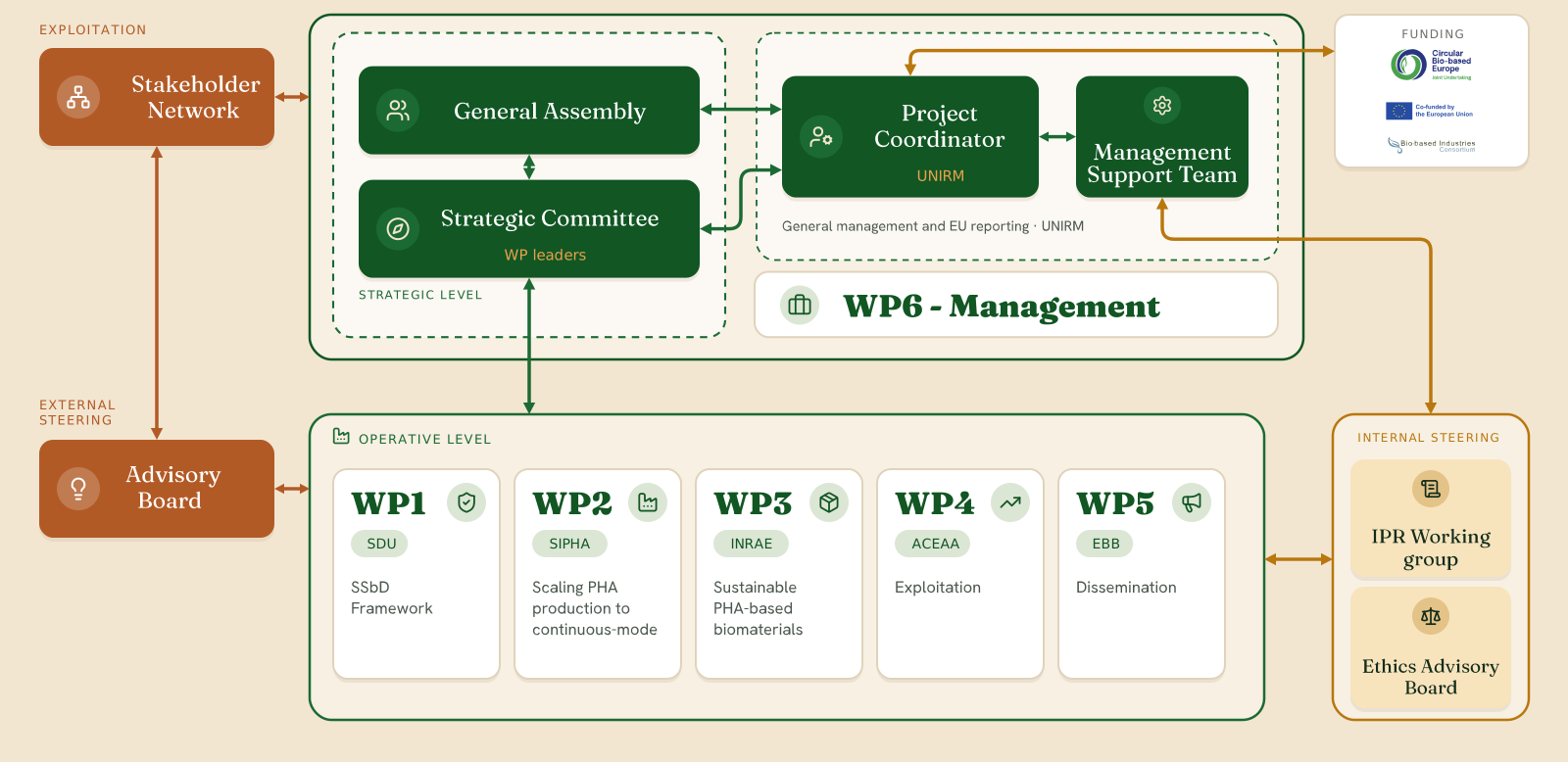
How the project is steered: strategic decisions, day-to-day management and the work packages that deliver.

PHACTUS consortium governance: WP6 Management contains the strategic level (General Assembly, Strategic Committee of WP leaders) and general management and EU reporting led by UNIRM (Project Coordinator and Management Support Team), reporting to the European Commission and CBE JU. The Stakeholder Network (exploitation) and Advisory Board (external steering) sit alongside; IPR Working group and Ethics Advisory Board provide internal steering; the operative level runs WP1 SDU, WP2 SIPHA, WP3 INRAE, WP4 ACEAA and WP5 EBB.

Scorri orizzontalmente per vedere il grafico completo.

Next

20 partners across 8 countries, coordinated from Rome.

Next

Public deliverables, communication materials and the press kit.